


News
The Glass tempering furnace are heat processing equipment working for glass quenching, mainly composed of heating section and quenching section. According the glass movement situation in quenching section, can be classified by Vertical tempering furnace, Air flotation tempering furnace and Horizontal tempering furnace.
01. Vertical tempering furnace, glass sheet heating and quenching with clamp which are the earliest method. It is mainly composed of heating and quenching section. after preprocessing (cutting, edging, washing, quality inspection etc.), glass sheet will be heat in heating section with the clamp. After reached process temperature, clamp will move glass into quenching section for evenly quenching and cooling with compressed air. High temperature difference between surface and mid-layer during tempering, so surface layer with crushing stress and mid-layer with tensile stress. Then take out the clamp and package after quality inspection. There are obvious clamp marks on the glass surface after vertical tempering, and thick glass will elongate and warping during heating with clamp, also seriously affect the glass optical performance. And can’t continue production, manual loading and unloading which are waste time and energy, difficult for automatic control, low output and flatness quality no good, glass material size can’t too large for the clamp chucking power limited reason. This type furnace advantages are low investment, low cost, easy operation, stop movement during heating, working for ultra-small size glass and double-coated glass.
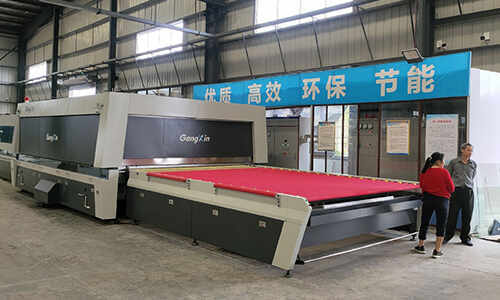
02. Air flotation tempering furnace, glass sheet suspend in air for tempering process, loading & quenching section with cold air, heating section with hot air. Mostly of the glass are lifting steadily by the air film which are from the nozzles (the air film thickness approximately 0.25mm); small parts (equivalent to 8~10% of the glass itself) supported by the chain or conveying device, driving the glass through the tempering furnace. Glass not contact with any solid object during tempering process, less surface damage and deformation, no clamp marks, higher glass quality and output. Moreover, 3mm thin glass can be tempered due to the large cooling capacity and its strength can be reached the 5mm which are tempered by vertical tempering furnace. But this type furnace high invest, glass material size and shape are limited, operation and control are complex and strict.
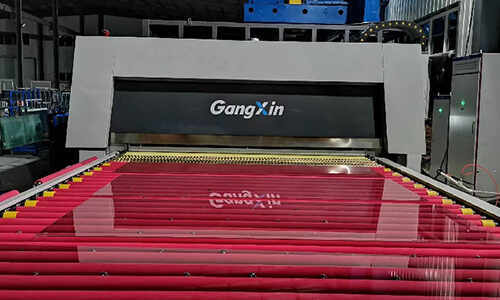
03.Horizontal tempering furnace, glass sheet conveyed by the horizontal roller and for heating, quenching and cooling process. This type furnace has the advantages of high production efficiency, varied products and wide range of processing capabilities. Working for 3-19mm thickness various types of clear glass, tawny glass, patterned glass, enamelled glass, coated glass etc. And high good quality, easy operation. For now the maximum process size of horizontal tempering furnace can be 2740mm×5000mm, min size are 100mm×200mm. For the roller gap and contact heating limited reason, horizontal tempering furnace cant process ultra-small glass and double-coated glass, and the glass surface quality is greatly affected by the ceramic roller, if the roller surface are rough, bend, damaged, unequal spacing etc. Which are easy marks or bends of the tempering glass.