


How to Accurately Calculate Tempering Furnace Power Consumption?
What is the Energy Consumption per Unit Area Formula?
The electricity cost of a tempering furnace is not simply "power × time," but is based on energy consumption per unit area. The core formula is: Electricity Cost = Actual Power Consumption (kWh) × Local Industrial Electricity Rate. For example, an energy-efficient tempering furnace processes 6mm glass with a specific energy consumption of approximately 3.5-4 kWh/m². Producing 100 square meters would therefore consume 350-400 kWh. As a technical reference point, the theoretical minimum energy required to heat 1 m² of 4mm glass is at least 1.9 kWh, based on the physical calculation E = ΔT × c × m.
How Does Loading Rate Affect Actual Power Consumption?
Heating a single small piece of glass consumes almost the same energy as heating a full furnace load. Therefore, improving loading efficiency and minimizing empty furnace time is the most effective way to reduce the electricity cost per unit area.
How Does Gangxing Tempering Furnace Perform in Energy Efficiency?
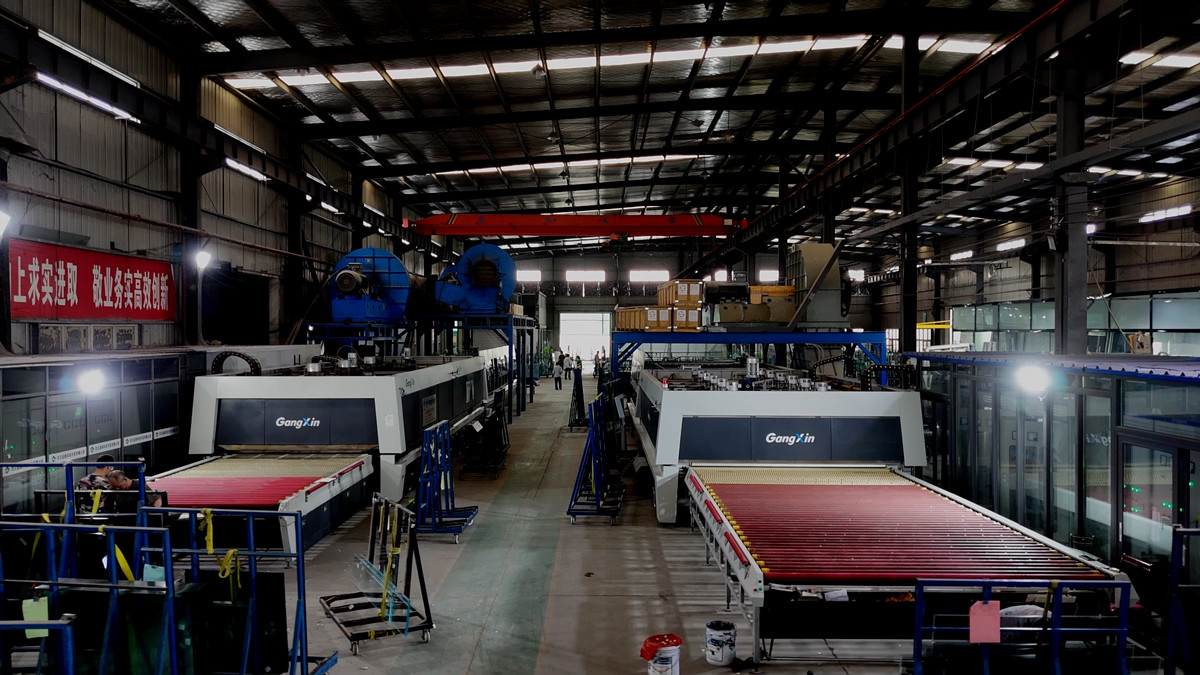
In terms of energy consumption control, Gangxing tempering furnaces utilize multi-layer insulation technology and labyrinth seal structures to effectively reduce heat loss. Combined with variable frequency drive (VFD) technology that dynamically adjusts blower speeds, Gangxing furnaces can significantly reduce ineffective power consumption by over 15% compared to traditional older equipment, ensuring every kilowatt-hour is precisely converted into uniform glass heating.
What Are the Core Factors Determining Glass Flatness?
Why is Heating Uniformity Critical?
If glass is heated unevenly in the furnace, thermal expansion and contraction create stress differentials. When the furnace temperature is too high or heating time is too long, the glass surface is prone to roller wave distortion. A high-precision temperature control system (e.g., ±1°C accuracy) is crucial for ensuring flat, straight glass.
How Does the Cooling Air Pressure System Work?
Whether tempered glass deforms or not comes down to air. After the glass exits the furnace, it relies on the air grid structure for rapid quenching. If the air pressure is unstable or the air grid distribution is uneven, the glass will warp or suffer from optical distortion during the rapid cooling phase.
What Are the Advantages of Gangxing Furnace in Flatness Control?
Gangxing tempering furnaces are deeply optimized in the cooling stage, with an air grid structure designed using fluid dynamics principles to deliver extremely uniform airflow. During the quenching phase, Gangxing equipment precisely controls air pressure distribution by zone, ensuring the glass cools quickly and evenly, fundamentally eliminating optical distortion caused by uneven cooling.
How to Solve the "White Haze" Issue on Tempered Glass Surfaces?
What Is the Root Cause of White Haze Formation?
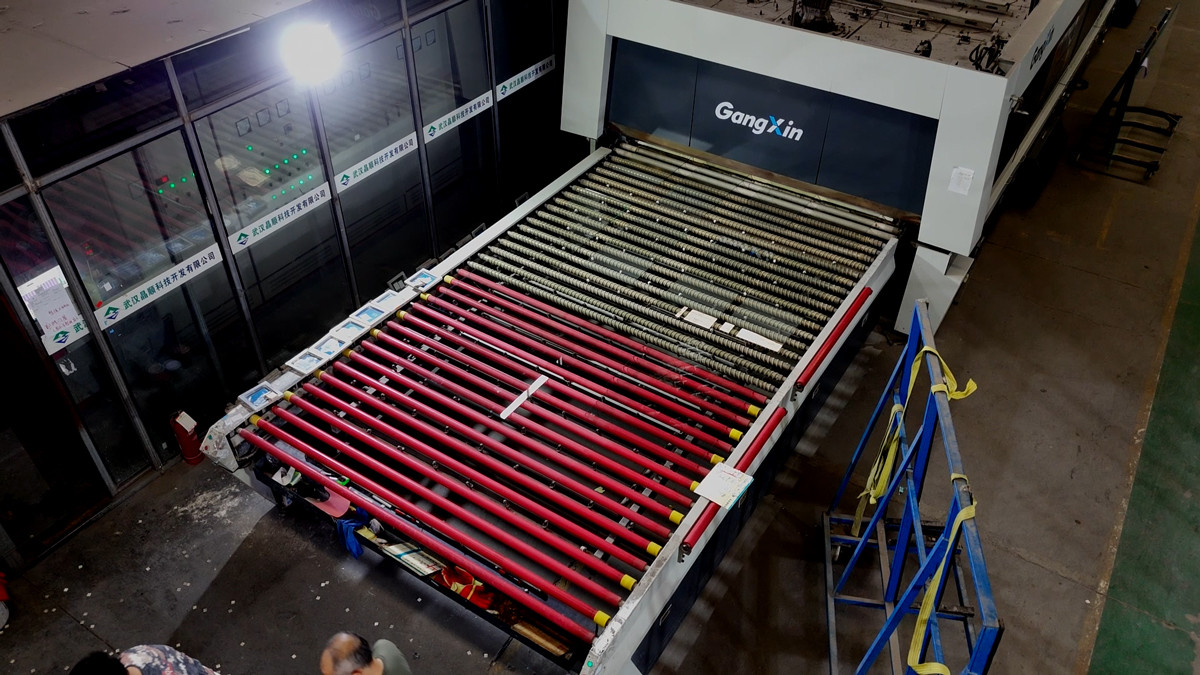
White haze is fundamentally microscopic mechanical scratches from the ceramic rollers. The most common cause is when the lower furnace temperature is set higher than the upper, causing the glass edges to curl upward upon entry. As the glass oscillates in the furnace, only the center line of the glass bears the full weight, creating friction with the ceramic rollers that results in scratch-like white haze.
Can Pre-processing Dust Cause White Haze?
Up to 80% of white haze issues originate from pre-tempering processing. If glass dust generated from edge grinding is not thoroughly washed off, or if the washing water circulation system is too dirty, the dust particles will sinter onto the glass surface at high tempering temperatures, forming a stubborn white haze layer.
How Does Gangxing Furnace Eliminate White Haze Risks?
To address white haze caused by parameter settings, Gangxing's adaptive control system intelligently adjusts the upper/lower temperature and convection ratio to ensure the glass lies flat upon entering the furnace, reducing abnormal friction with the rollers. Simultaneously, its high-precision ceramic roller drive system operates with extreme stability, preventing surface scratches caused by mechanical vibration or roller desynchronization for flawless, clear glass.
Frequently Asked Questions (FAQ)
Q: Why is my tempering furnace power consumption much higher than the manufacturer's claimed value?
This is usually related to "loading efficiency." If the loading area only covers 5% of the furnace, most of the energy generated by the cooling blowers is wasted. It is recommended to optimize production scheduling to fill the furnace as much as possible, reducing the average electricity consumption per square meter.
Q: Does white haze affect the safety performance of tempered glass?
No. White haze is merely superficial micro-scratches or optical distortion and does not affect the internal stress distribution of the glass. Even upon breakage, it will still form blunt particles that meet safety glass standards, but it severely impacts appearance and market value.
Q: How to determine if a tempering furnace's insulation performance is up to standard?
The most intuitive method is to "feel." During full-load operation, if the furnace shell is noticeably hot to the touch, it indicates that the insulation density is insufficient or aged, and significant heat is being lost, which will directly cause electricity costs to skyrocket.
Summary & Action Guide
Power consumption calculation must combine loading rate with specific energy consumption.
Flatness is determined jointly by heating uniformity and the air pressure system.
White haze issues mostly originate from upper/lower temperature differentials and mechanical friction.
Action Step: Immediately apply the troubleshooting logic from this article to check your tempering furnace parameters and optimize the next production batch schedule.