


News
Glass Tempering Furnace Price: Why Costs Vary & How to Buy Smart
In the glass deep-processing industry, the tempering furnace is a core production asset, and the vast price differences often bewilder first-time buyers. Prices can range from a few hundred thousand to several million RMB. What technological barriers and cost logics lie behind this enormous price gap? How can buyers see through the fog of price to understand the true value of the equipment and avoid the pitfall of "penny wise, pound foolish"? This article will delve into the industry realities and technical details to provide answers.
1.The Logic Behind Price Tiers: Why Are Some Furnaces So Cheap?
Tempering furnace prices are not arbitrary; they directly reflect the equipment's configuration, energy consumption, output efficiency, and safety features. Low-cost furnaces achieve their "budget" price by making compromises in several key areas:
· Compromised Heating Elements: The heart of a tempering furnace is its heating elements. High-end equipment uses imported or top-tier domestic high-temperature resistance wire, capable of withstanding temperatures up to 1400°C, offering a long lifespan and precise temperature control. Budget models often use ordinary iron-chromium-aluminum wire or even recycled wire. While cheaper initially, these are prone to breakage and result in poor temperature uniformity, causing defects like waviness or anisotropy in the glass.
· Simplified Temperature Control System: Tempered glass is extremely sensitive to temperature. Expensive furnaces employ multi-zone, high-precision PID intelligent temperature control, maintaining temperature deviations within ±1°C. Cheap furnaces might only have basic relay control, leading to large temperature fluctuations. This not only increases scrap rates but can also cause the furnace's ceramic rollers to deform.
· Downgraded Quenching System: The quenching system determines the glass's fragmentation patternand flatness. To save costs, budget equipment often uses underpowered fans, narrower ducts, or inferior steel for the nozzles. This results in insufficient or uneven air pressure, producing glass with poor flatness that may fail to meet stringent safety standards like the 3C certification.
· Substandard Drive System: The drive system is the furnace's backbone. High-end equipment uses precision chains and bearings with variable frequency drive speed control for smooth, quiet operation. Budget models often use standard chains, resulting in noisy, shaky performance. Over time, this can cause roller misalignment, glass skewing inside the furnace, and even catastrophic failures like "furnace explosions" .
2. The Value of Premium Equipment: Where Does the Cost Go?
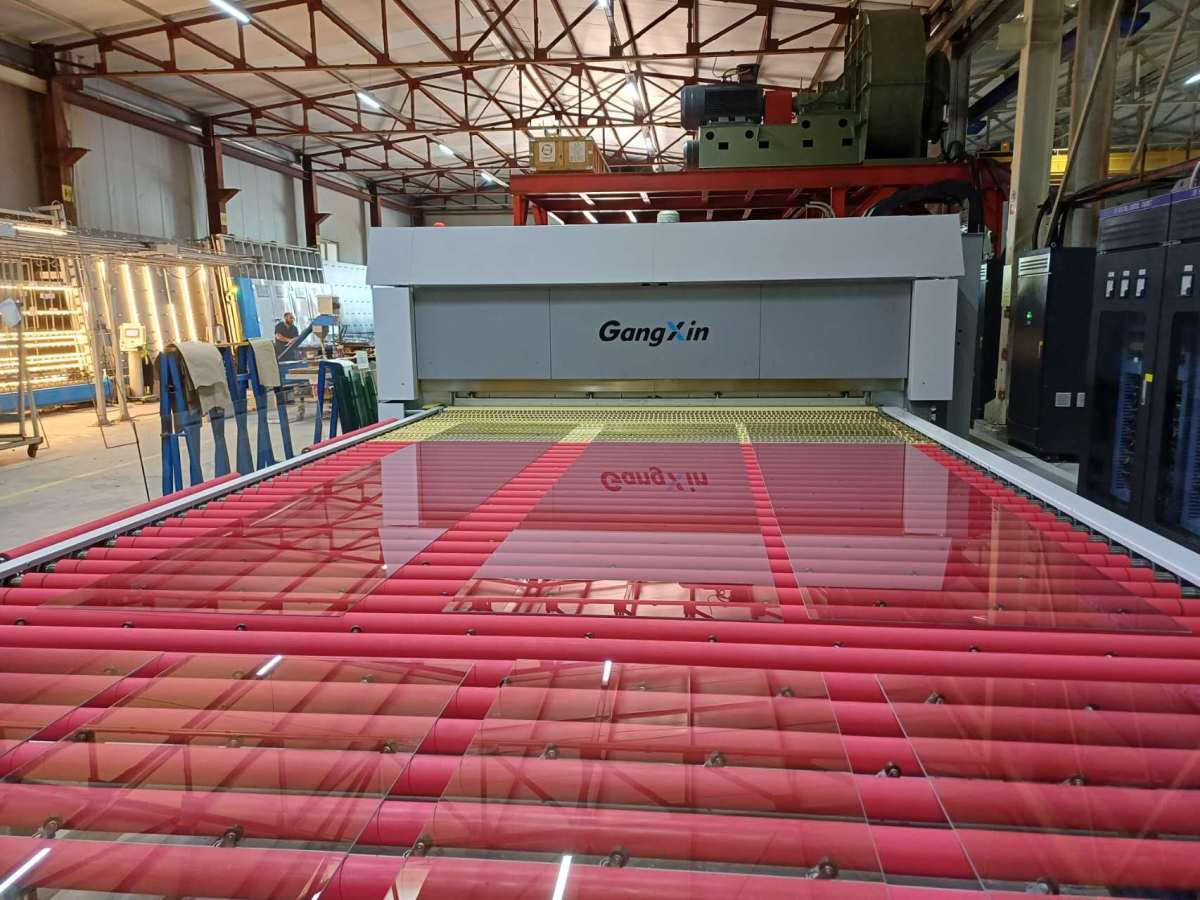
Let's take the high-end production line from Gangxin Tempering Furnace as an example. Its premium price is justified by the following value propositions:
· Exceptional Flatness Control: High-end equipment features complex roller correction systems and micro-adjustable quenching nozzles. This allows for the production of both ultra-thin and ultra-thick glass with minimal optical distortion, meeting the stringent standards required for curtain wall glass.
· Intelligence and Energy Efficiency: Modern premium furnaces are equipped with waste heat recovery systems and intelligent management software. These systems automatically adjust power consumption based on the glass load, reducing energy consumption by 20%-30% compared to older models.
· Safety Redundancy: Premium manufacturers incorporate comprehensive hardware redundancies for emergency stops, power failure protection, and over-temperature alarms, maximizing the safety of personnel and the facility.
3. A Buyer's Self-Inspection Guide: 10 Points to Identify Quality
To avoid purchasing industrial-grade junk, we recommend buyers use the following 10-point checklist when evaluating equipment:
1. Inspect the Furnace Insulation: Check the thickness (typically ≥200mm for quality models) and brand of the insulation material. A well-insulated furnace will have a cool outer shell; a hot shell indicates massive heat loss, where the wasted energy cost over a year could pay for a whole new furnace.
2. Verify the Heating Element Material: Demand the manufacturer's material certification for the heating wire. Insist on top domestic brands. Avoid any unbranded or uncertified product.
3. Test the Temperature Control Precision: Observe the brand of the temperature control PLC (e.g., Siemens, Mitsubishi). Ask about the number of temperature control zones – more zones mean more uniform heating.
4. Check the Ceramic Roller Brand and Flatness: Rollers are wear items. Imported brands (like Vesuvius) or reputable domestic ones (like Sinoma, Suzhou Innovation, Komolara) are more durable. Use a spirit level to check the flatness of the roller bed; the tolerance should be extremely small.
5. Assess the Quenching Nozzle Weight and Material: High-quality nozzles are thick-walled and heavy. Thin, lightweight nozzles are prone to deformation under high air pressure.
6. Check for Fan Vibration: During a test run, lightly touch the fan housing with the back of your hand. High-end fans operate smoothly with minimal vibration; cheap ones will vibrate intensely and produce loud noise.
7. Examine the Electrical Cabinet Layout: Open the electrical cabinet. Is the wiring neat and standardized? Are contactors and circuit breakers from top brands like Schneider or Siemens? Cheap electrical components are a fire hazard.
8. Inquire about Software Features: Modern furnaces are intelligent. Ask if it has features like fault self-diagnosis, production data logging, and remote software updates.
9. Inspect Reference Sites: Don't just look at brochures; visit existing customer sites, especially those using equipment that's been operational for over three years, to assess its long-term condition.
10.Clarify After-Sales Service Terms: A tempering furnace requires long-term maintenance. Clearly define the warranty period, spare parts availability, and technician response times.
4. Conclusion: Choosing Wisely is More Important Than Working Hard
Purchasing a tempering furnace is a long-term investment, not a one-time expense. While a cheap furnace may save money upfront, the subsequent costs of high scrap rates, high energy consumption, frequent repairs, and safety hazards can often cost you many times more in the long run.
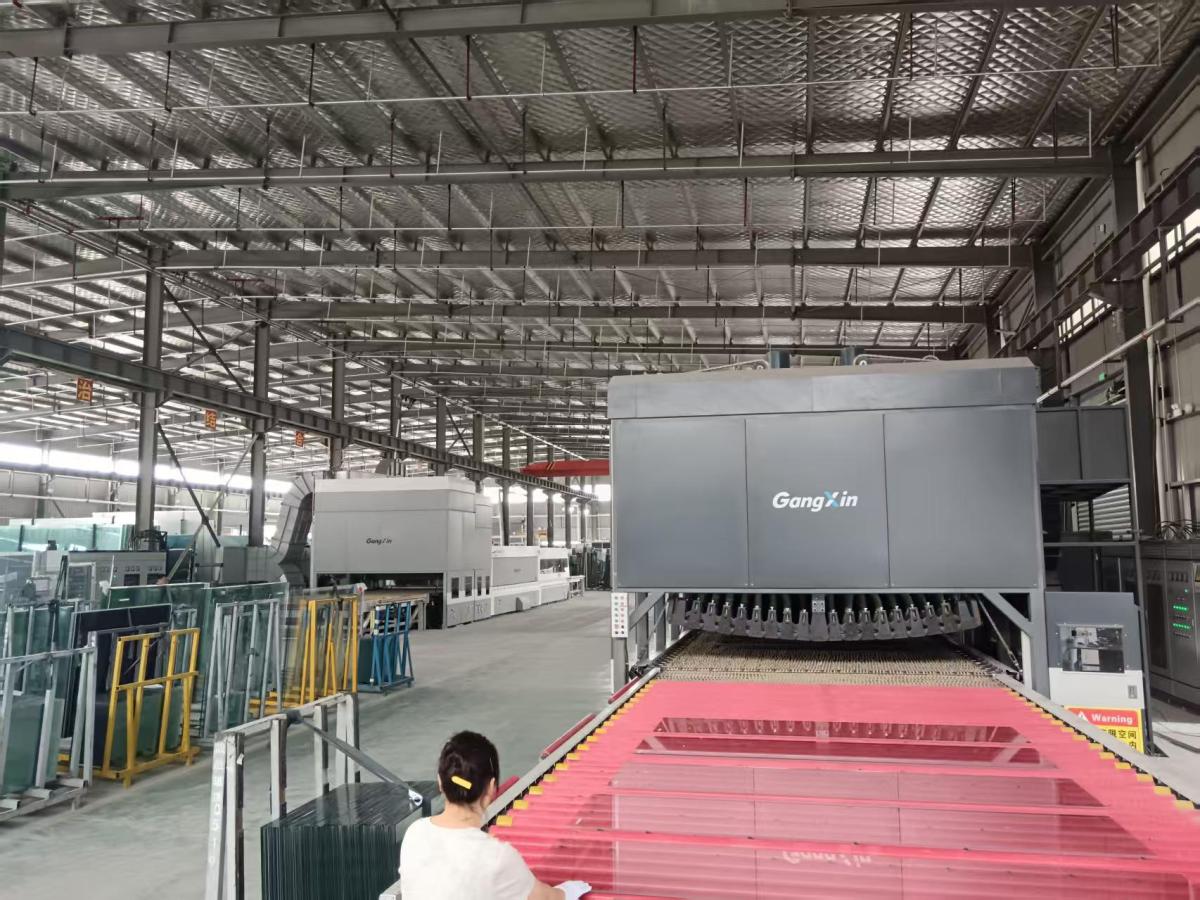
When exploring the market, look beyond well-known international brands. Many domestic manufacturers with years of industry experience and solid reputations offer reliable equipment. For instance, Gangxin Tempering Furnace has built a loyal customer base in recent years due to its robust construction and stable temperature control. They avoid blind price wars, instead focusing on the quality of heating uniformity and mechanical durability. This "substance over style" approach is often an undervalued, high-quality option for medium-sized glass factories seeking the best value for money.
Ultimately, by thoroughly understanding the equipment's construction and adhering to the principle of "seeing is believing," you can acquire the right production tool to truly boost your business.